About
A modern dictionary for a 90-year-old idea.
In 1933, a Japanese painter named Sanzo Wada published a six-volume book cataloging 348 color combinations drawn from traditional Japanese dyes, textiles, and cultural practice. It became an underground reference for designers, fashion editors, and color-theory nerds for the next ninety years — precisely because it was curated, not generated.
This site is an attempt to bring that curatorial spirit to the web. Not a palette generator. Not a library of infinite randomized swatches. A dictionary. With entries. With sources. With stories.
Who was Sanzo Wada?
Sanzo Wada (和田 三造, 1883–1967) was a painter, costume designer, and color researcher. He was trained in Western oil painting at the Tokyo School of Fine Arts, lived and studied in Europe, then returned to Japan where he spent decades documenting traditional color names and combinations from weaving, dyeing, printmaking, and costume. In 1953 he won the first Academy Award for Best Costume Design for the film Gate of Hell.
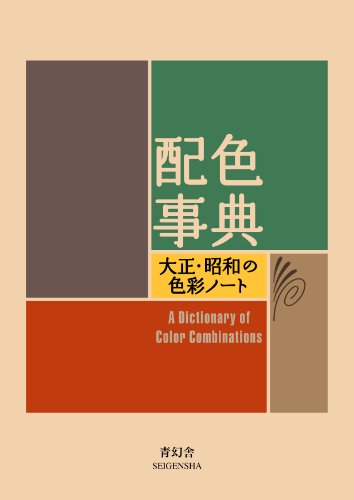
His Dictionary of Color Combinations ( 配色事典) was a reference book, not a coffee-table object — each plate paired two or three colors and gave them context. It's out of print in the original, though Seigensha has republished portions of it.
What's actually here
Two collections, one archive. The first is the complete 348-plate catalog from Wada's 1933 book — every numbered combination, reconstructed from the community-maintained dataset that other Wada tribute projects have been using for years. The hex values and color names are facts and part of the public-domain commons; the specific numbered plates are reproduced here as a reference to the tradition, not as a substitute for the book itself. If you love them, buy the Seigensha edition — it's beautiful and it deserves a place on your shelf.
The second collection is thirty editorial deep-dives — hand-written palettes rooted in traditional Japanese shikisai (色彩) names, each with its own historical context, era tag, and usage notes. Think of them as curator's labels next to the catalog — where the Wada plates give you the what, these give you the why.
How to use it
- Designers: browse by mood or era, copy the hex list, and use as a starting point. Every palette has a documented historical context you can defend in a client review.
- Developers: hit the Tailwind config and CSS variables export. The hex values work in any framework, any language.
- Artists: the traditional Japanese names (with kanji and romaji) map to real pigments and dyes. Search the names to find historical references.
- Writers + historians: each palette includes a description of when, where, and why these colors were used together.
Where the archive is going next
The 348-plate Wada catalog is complete. What's still ahead: richer editorial notes on each plate, higher-fidelity Japanese name cross-references, era tagging across the whole set, and search by color distance. If you want to hear when each of those ships, there's a once-a-week newsletter — no spam, just one plate, one note, one story at a time.
Credits & ethics
The traditional Japanese color names used here are part of the cultural commons and have been in use for centuries. Historical context, descriptions, and curatorial decisions are original work. No images or text from Wada's book or its modern republications are reproduced here.
If you're the rights holder of something you believe is reproduced here in error, please get in touch: hello@colorcombinations.org.
“Color is a power which directly influences the soul.”
— Wassily Kandinsky, 1911